
Case Study: Mobile Game Launch Influencer Campaign, UAE
A step-by-step look at how OneHub plans and executes a mobile game launch influencer campaign across the UAE — from creator strategy through install results — for studios weighing whether influencer marketing is the right channel for a launch.
Why a Single-Agency GCC Strategy Works Better for Gaming
Every GCC gaming market has its own platform mix, genre preferences, and creator landscape — but running separate agency relationships in each country slows down what should be a tightly coordinated, time-sensitive launch. OneHub maintains vetted local gaming creator networks in every GCC country, coordinated centrally so a launch wave can go live simultaneously across markets rather than staggered by whichever local agency moves fastest.
This structure also means install performance data flows back centrally — if a specific creator or content style is significantly outperforming in Saudi Arabia, that insight can inform creator selection in Qatar or Bahrain within the same campaign window, rather than each market operating with no visibility into what’s working elsewhere.
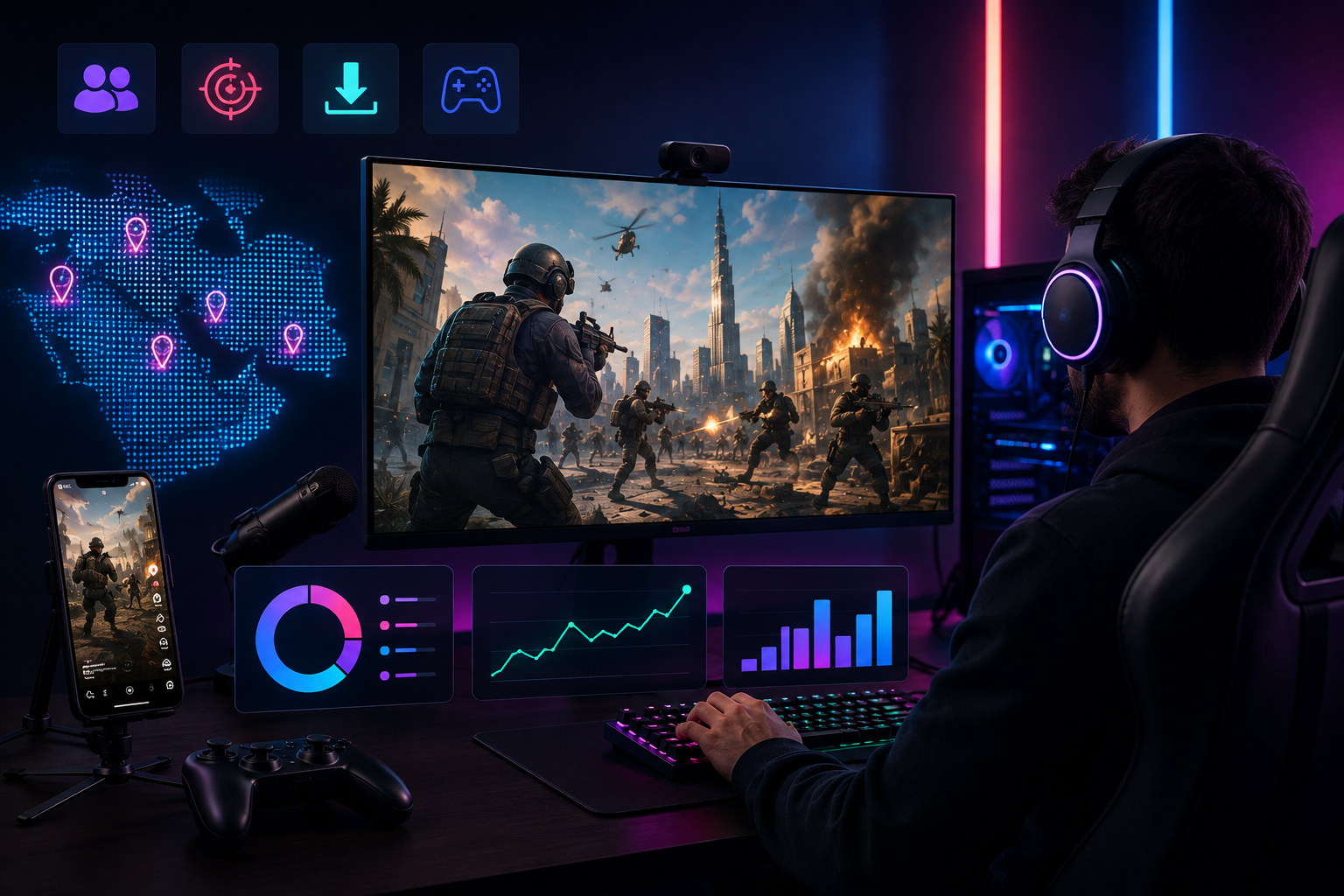
The Challenge of a Mobile Game Launch
A mobile game launch has a narrow window to build initial install momentum — app store algorithms reward early download velocity, and a slow start can mean a game never gets the organic visibility boost that a strong opening week generates. Paid UA alone can drive volume, but often at a cost per install that makes early scaling difficult, and it doesn’t build the kind of organic word-of-mouth that keeps a game visible after the initial ad spend tapers off.
The Approach
OneHub structures mobile game launch campaigns around a coordinated creator wave timed precisely to the app store release — typically fifteen to twenty-five creators across YouTube, TikTok, and Twitch, launching content within the same 48-hour window to create a concentrated spike in both installs and app store visibility. Creator selection prioritizes genuine genre fit over pure follower count, since a strategy game creator’s audience converts far better for a strategy title than a generalist gaming creator with a broader but less relevant following.
We also layer in a smaller group of UGC-style creators producing ad-ready content in parallel, giving the studio’s paid UA team fresh creative to run alongside the organic creator wave — extending the launch’s reach beyond what organic creator posting alone would achieve.
Content Strategy
Content spans full gameplay videos that give viewers genuine insight into mechanics, shorter hook-driven clips optimized for immediate install intent, and where the title supports it, live streaming events that build real-time community excitement around the launch. Each format serves a different point in the potential player’s decision journey, from initial awareness through the final install decision.
Measuring Success
Beyond standard engagement metrics, OneHub tracks install volume and cost per install for every creator individually, along with day-one and, where available, day-seven retention. This granular tracking is what lets a studio identify which specific creators and content styles are worth continuing to work with beyond the initial launch window.
Lessons That Apply Broadly
A few patterns hold consistently across mobile game launches: a concentrated launch-window creator wave drives a meaningfully stronger app store visibility boost than the same creator roster spread out over several weeks, genre-fit creators consistently outperform larger but less relevant creators on install-to-play conversion, and pairing organic creator content with UGC production for paid amplification extends a launch’s total reach beyond what either approach achieves alone.
How OneHub Applies This to Your Launch
Every game has its own genre, target player, and monetization model, and OneHub adapts this general framework — concentrated launch timing, genre-fit creator selection, organic-plus-UGC content mix — to fit your specific title rather than applying a rigid template. The underlying discipline of coordinated timing and install-focused attribution stays consistent across every launch we run.
OneHub is the Trusted Influencer Marketing Agency Across the UAE & GCC
Over the years, we’ve built a strong network of creators across UAE and the GCC region. From nano and micro influencers to macro creators and celebrities, we help brands launch strategic campaigns that reach the right audience, strengthen brand awareness, and generate real ROI through data-driven influencer marketing.
Frequently Asked Questions
It’s also worth noting what tends not to work: spreading a fixed creator budget thinly across too many creators with weak genre fit, rather than concentrating spend on fewer, more relevant creators, consistently produces a weaker install-to-play conversion rate. Studios are often tempted to maximize reach by including as many creators as possible, but OneHub’s data consistently shows that relevance beats raw reach for this specific category.
Post-Launch: What Happens After the Initial Wave
The concentrated launch wave is only the first phase — OneHub typically recommends a smaller, ongoing creator presence in the weeks following launch to sustain install momentum as the initial spike naturally tapers off. Studios that treat the launch wave as a one-time event, with no follow-up content plan, often see install volume drop sharply once the coordinated push ends.
OneHub typically recommends starting creator outreach and planning four to six weeks before the confirmed launch date, to secure the right creator roster and coordinate timing properly.
Install volume, cost per install, and where available, day-one and day-seven retention are tracked per creator and reported throughout and after the campaign.
This varies by budget and genre, but most OneHub launch campaigns involve fifteen to twenty-five creators across the concentrated launch window.
Yes — the same framework scales down effectively for smaller budgets, typically with a smaller, more tightly genre-matched creator roster.
Yes — top-performing organic creator content from the launch wave can be paired with paid amplification to extend reach further during the critical launch window.
Planning a mobile game launch of your own? Get a free launch campaign proposal from OneHub.