
The Shift in How Students Choose a College
A decade ago, a prospective student’s college research process looked very different: prospectuses, open days, and word of mouth from family or school counsellors. Today, that process has moved almost entirely online, and increasingly onto social platforms where students follow campus lifestyle influencers, watch day-in-the-life content, and form impressions of a college long before ever visiting in person or speaking to an admissions officer.
This shift means a college’s digital presence, and specifically its presence within genuine student and creator content, now plays a direct role in whether it even makes a prospective student’s shortlist.
This shift is not limited to any single course level or institution type. From vocational colleges to research universities, prospective students across the board increasingly expect to see genuine, unscripted content before they take an institution’s own claims at face value.
Why Traditional Advertising Falls Short With Gen Z
Gen Z influencers in the UAE and elsewhere have grown up highly skilled at identifying and tuning out traditional advertising. A polished institutional video or a paid social ad, however well produced, rarely carries the same weight as an unscripted clip from a real student talking honestly about their experience. Colleges that rely solely on traditional advertising formats are increasingly speaking past their target audience rather than to them.
This tendency to distrust polished advertising extends beyond college marketing specifically. Gen Z audiences broadly favour raw, lower-production content over heavily edited material, which means colleges investing purely in high-budget video production may be optimising for the wrong signal entirely.
Building Trust Through Real Student Voices
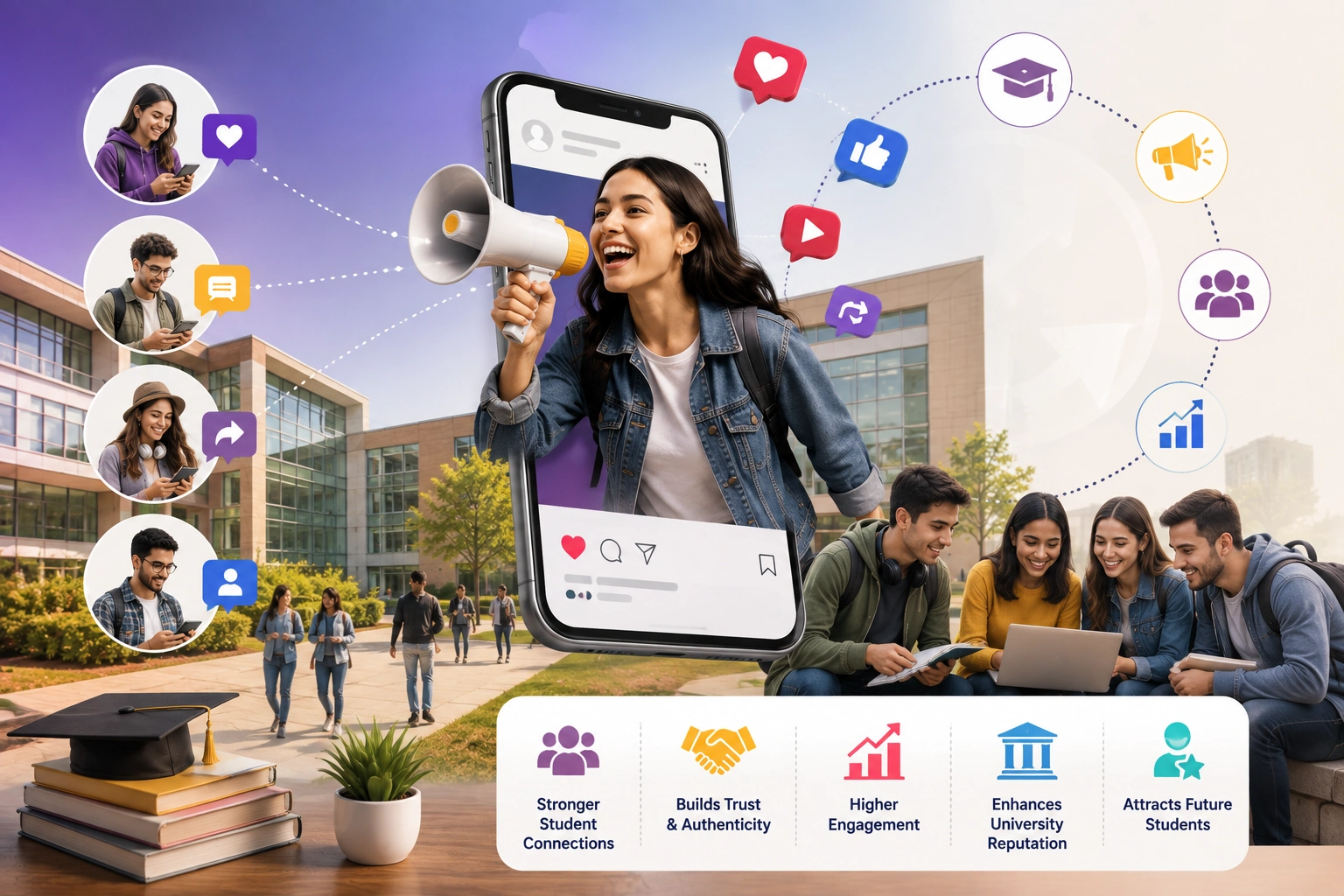
Dubai student content creators and their equivalents across the region have built audiences precisely because their content feels honest and unfiltered. When a college partners with these creators, or supports current students in creating similar content, it borrows that same trust, rather than trying to manufacture it through institutional messaging alone.
This trust extends into the comment sections of creator content as well, where prospective students often ask direct questions about workload, social life or accommodation, and receive candid answers from the creator or their followers, something a college’s own channels rarely replicate with the same openness.
The Role of Campus Lifestyle Influencers in Admissions
Campus lifestyle influencers in Dubai play a particularly valuable role in the admissions funnel, since they can showcase everyday details, dorm life, social scenes, favourite study spots, that a formal marketing campaign would rarely think to cover. These details often matter more to a prospective student’s final decision than academic rankings alone.
Beyond admissions, campus lifestyle influencers also play a valuable role in improving retention, since newly enrolled students who see relatable content from current students often settle into campus life more quickly, having already formed a mental picture of what to expect before arriving.
What Happens When Colleges Ignore Influencer Marketing
Colleges that ignore this shift do not simply miss an opportunity, they actively cede ground to competitor institutions that are already building a presence within student-generated content. Prospective students comparing several colleges will naturally gravitate toward the ones they can actually picture themselves at, and that picture increasingly comes from creator content rather than a printed brochure.
This is compounded during high-intent periods like back to school and back to campus season in the UAE, when back to school offers and back to campus content are already dominating student and parent attention. A college with no presence in that conversation is easy to overlook entirely.
This dynamic plays out clearly during peak international recruitment periods as well, when prospective students comparing institutions across different countries often rely even more heavily on creator content, since a physical campus visit is rarely practical before making a final decision.
How to Start Building Your College's Influencer Strategy
A practical starting point is identifying a small group of current students with genuine content ability and building an informal ambassador relationship with them, before scaling into paid partnerships with campus lifestyle or Gen Z creators for specific admissions moments like open days or enrolment deadlines. Consistency matters more than scale at the outset, a handful of authentic voices posting regularly will outperform a single large but disconnected campaign.
Rather than trying to control every message centrally, colleges tend to see stronger results by giving a small, well-briefed group of student ambassadors genuine creative freedom, since prospective students respond more strongly to content that feels naturally student-led than to material that reads as institutionally approved.
Get Started With OneHub
OneHub helps colleges and universities across the UAE and GCC build influencer marketing strategies rooted in real student voices, from ambassador programs through to fully managed admissions campaigns. Contact our team to start building your college’s strategy.
Frequently Asked Questions
Is influencer marketing really necessary for colleges?
Given how heavily prospective students rely on social content to research their options, colleges without any influencer presence risk being overlooked in favour of competitors who show up authentically in that content.
What happens if a college doesn't invest in influencer marketing?
Colleges risk losing visibility among prospective students who are actively comparing options based on real student content, ceding attention to competitor institutions with an established creator presence.
How is influencer marketing different from a college's usual social media presence?
A college’s own social channels reflect an institutional voice, while influencer marketing brings in independent student and creator voices that carry more credibility with prospective applicants.