
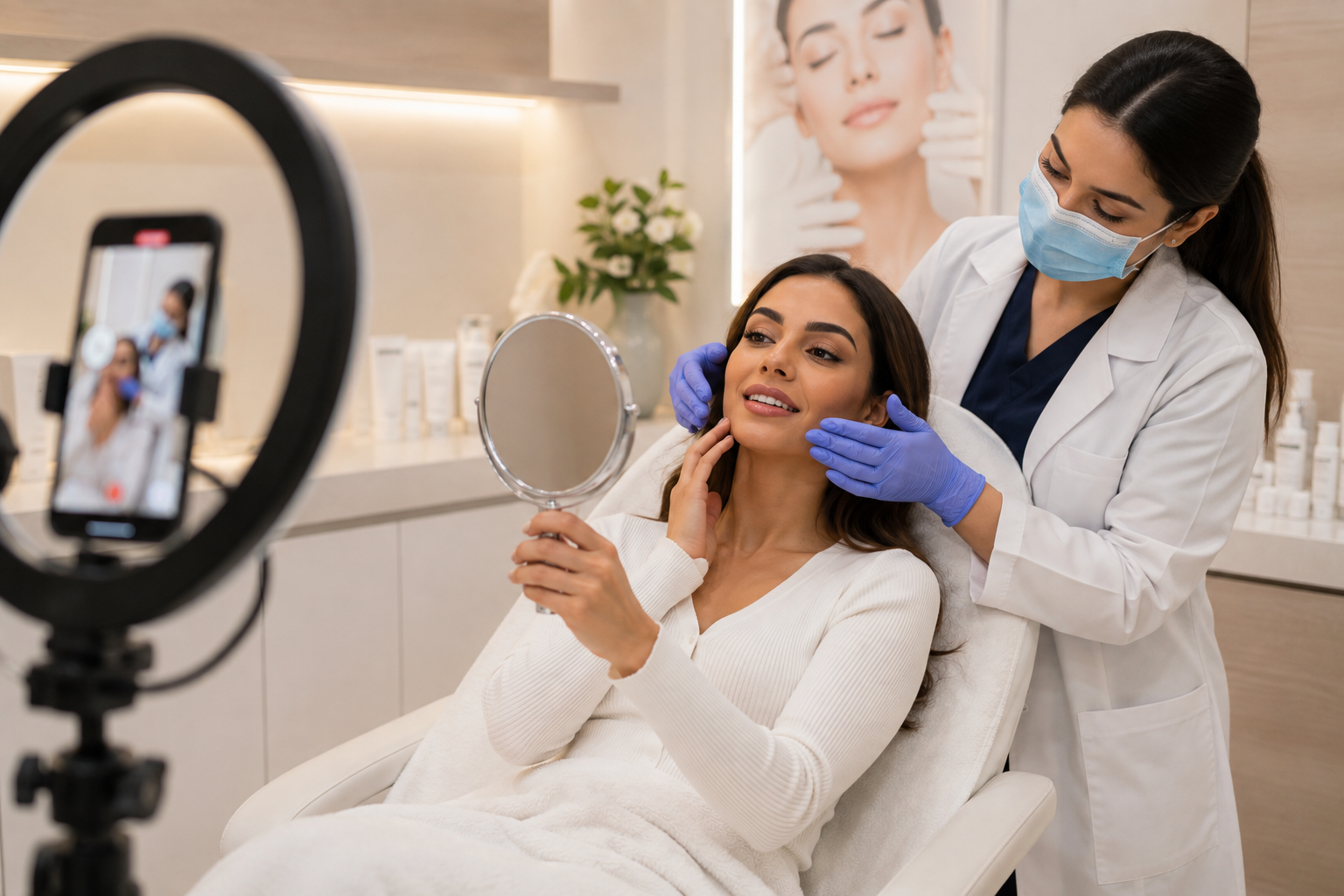
Patients across the UAE rarely find a dermatology clinic through a phone book or a billboard anymore. They scroll Instagram, watch a real patient’s laser treatment on TikTok, and check which creators their friends trust before booking a consultation. That shift is why dermatology clinic influencer marketing in Dubai has become one of the fastest, most cost-effective ways for skincare and aesthetic practices to fill their appointment books.
This post breaks down why influencer marketing works so well for clinics in the UAE, what the rules require, and how to build or choose a campaign that turns followers into paying patients.
Why the UAE Skincare Market Is Ready for Influencer Marketing
The UAE has one of the most social-media-saturated populations in the world, with penetration near 99%. Combine that reach with high disposable income and a culture that talks openly about cosmetic and dermatological treatments, and you get a market built for creator-led marketing.
The industry data backs this up: UAE influencer marketing is on track to pass $620 million in 2026, growing at roughly 24% year over year. For clinics specifically, around 72% of UAE consumers say they trust influencer recommendations over brand advertising, and about 65% have booked or bought something after seeing a creator recommend it. Dubai and Abu Dhabi alone account for nearly 70% of all influencer campaign activity in the country — the exact audience most clinics are trying to reach is already watching this content every day.
How Dermatology Clinic Influencer Marketing Works in Dubai
A campaign generally follows six steps, though the medical and legal coordination is more involved than most in-house teams expect: discovery of creators who match the target patient profile, vetting for engagement quality and brand safety, content briefing from the clinic’s medical team, filming and clinical review before anything is posted, publishing with the required permit disclosures, and tracking bookings generated by each piece of content. Healthcare content in the UAE is regulated at every one of these stages, not just at the point of publishing.
Builds trust faster than traditional ads
A patient weighing a chemical peel or a mole check is more likely to trust a real person’s video than a polished clinic ad. Influencer content reads as a recommendation rather than a sales pitch, and in an industry where trust drives the booking decision, that difference matters.
Reaches highly targeted local audiences
Dubai-based creators often have hyper-local followings by nationality, neighborhood, or skin type, letting a clinic target Emirati patients, expat professionals, or a specific age bracket far more precisely than broad-reach advertising ever could.
Cost-effective compared to traditional media
A single micro-influencer partnership can cost a fraction of a billboard or magazine placement while generating trackable, attributable bookings.
Humanizes clinical services
Dermatology and aesthetic treatments can feel intimidating. A real patient walking through their acne journey or laser hair removal experience shortens the path from curiosity to consultation.
Types of Influencers to Work With
Micro-influencers (10,000–100,000 followers) tend to deliver the strongest engagement — averaging 4.2–7.8% versus under 1.5% for mega-influencers — making them ideal for building trust around a specific treatment. Mid-tier creators (100,000–500,000) suit broader awareness pushes or a new clinic launch. Macro and celebrity influencers (500,000+) add credibility but usually deliver lower engagement per dirham spent. Patient-creators — real patients with modest followings who document their own treatment journey — are often the most persuasive and lowest-cost option for dermatology specifically.
UAE Compliance Rules Every Clinic Must Know
Clinics are legally responsible for content filmed on their premises, even if an influencer posts it from a personal account. From February 1, 2026, every influencer and anyone posting promotional content in the UAE must hold a valid UAE Media Council advertiser permit, on top of any commercial trade license — non-compliance can carry fines of up to AED 500,000 per violation. Every piece of healthcare advertising content also needs DHA pre-approval and must display the facility’s medical advertisement license number. Content cannot promise specific outcomes or use unverified superlatives, before-and-after images require documented patient consent, and only DHA-licensed practitioners can make clinical claims on camera. A skincare clinic influencer marketing agency in the UAE that understands these requirements isn’t optional — it’s the difference between a campaign that grows the clinic and one that triggers a MOHAP or DHA violation.
How to Choose an Influencer Marketing Agency for a Skincare Clinic
Look past follower counts and creative reels toward operational fit. Ask for healthcare-specific case studies, not general lifestyle brand work. Confirm the agency can explain DHA and UAE Media Council rules without hesitation. Ask how they vet creators for authenticity and audience quality. Insist on reporting tied to bookings and consultation requests, not just likes. And make sure the agency understands Dubai and Abu Dhabi audience segments, seasonality like Ramadan and the summer travel lull, and that Instagram and TikTok dominate the UAE market. The best influencer marketing agency for clinics in Dubai acts as an extension of your medical marketing team, not just a booking service for creators.
Measuring ROI
Track consultation bookings, not engagement alone. Unique promo code redemptions, dedicated landing page conversions, call-tracking numbers tied to each influencer, and cost per booked consultation across creators will show which influencer tiers and formats actually convert followers into patients over time.
Frequently Asked Questions
What is dermatology clinic influencer marketing in Dubai?
It’s a marketing approach where dermatology and skincare clinics partner with social media creators to showcase treatments, results, and patient experiences, building trust and driving consultation bookings among UAE audiences.
Is influencer marketing legal for medical clinics in the UAE?
Yes, but it’s regulated. Clinics must follow DHA advertising standards and, from February 2026, ensure influencers hold a valid UAE Media Council advertiser permit before posting sponsored content.
How much does skincare clinic influencer marketing cost in the UAE?
Costs vary by influencer tier, from a few hundred dirhams for nano-influencers to tens of thousands for macro-influencers. Micro-influencer campaigns typically offer the best cost-to-engagement ratio.
What size influencers work best for dermatology clinics?
Micro-influencers with 10,000–100,000 followers generally perform best, delivering 4.2–7.8% engagement compared to under 1.5% for larger accounts, while feeling more authentic to skincare audiences.
How do I choose an influencer marketing agency for my skincare clinic?
Prioritize agencies with healthcare experience, fluency in DHA and UAE Media Council rules, a rigorous creator vetting process, and reporting tied to consultation bookings rather than vanity metrics.
How long before I see results?
Most clinics see measurable booking inquiries within 4–8 weeks, with stronger, compounding results after 3–6 months of consistent creator partnerships.