
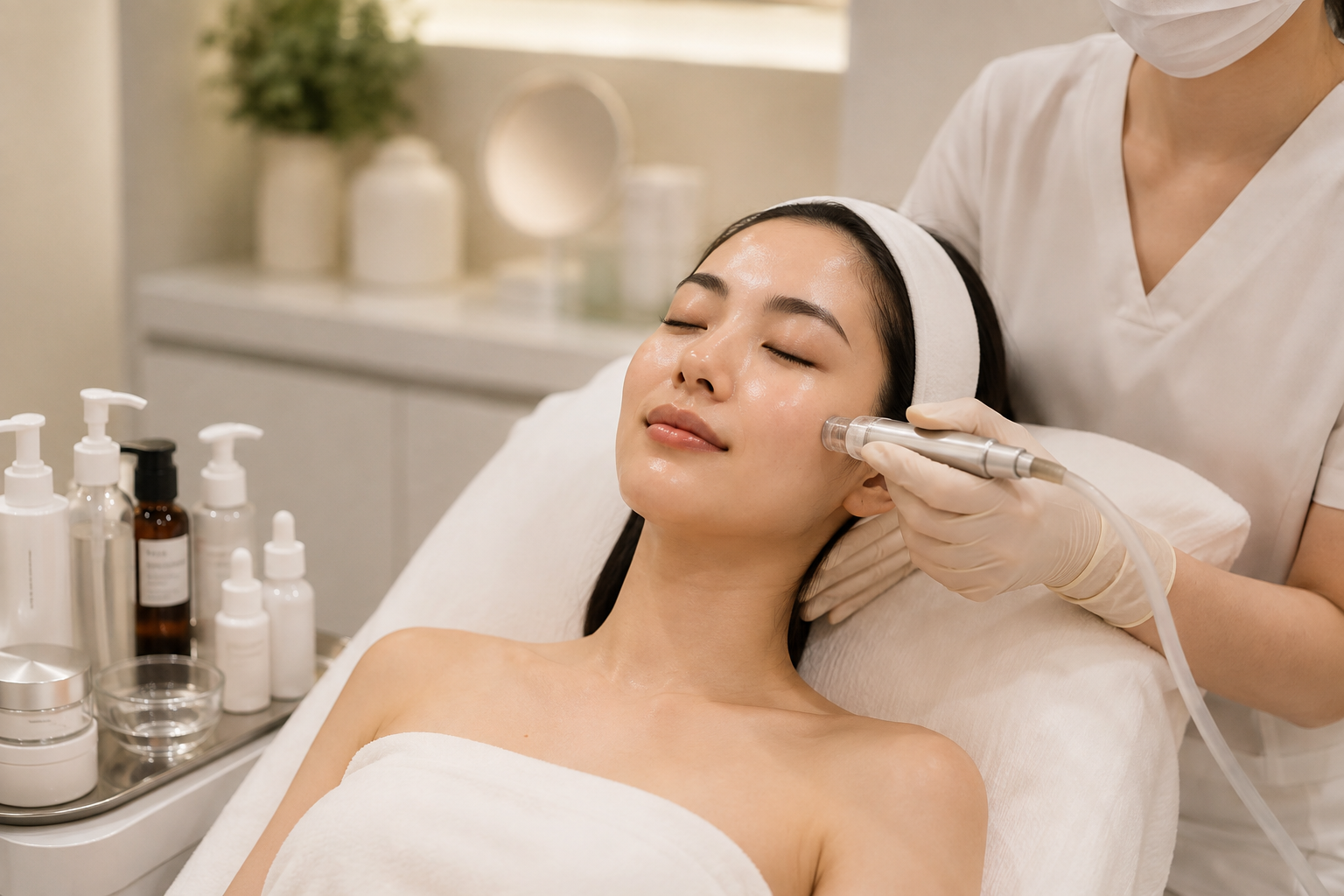
K-beauty has moved well past a passing trend in the Gulf. Ten-step routines, glass skin, and Korean-developed treatments like laser toning and hydra-facials now sit alongside long-established Gulf skincare habits, and clinics in Dubai, Abu Dhabi, and Riyadh are building entire service lines around the aesthetic. For clinics chasing this demand, Korean skincare influencer marketing in the UAE has become one of the most effective ways to reach an audience that already spends hours a week consuming K-beauty content.
Why K-Beauty Resonates With Gulf Audiences
The appeal isn’t just aesthetic. K-beauty’s emphasis on skin health over heavy coverage, gentle multi-step routines, and visible glow fits naturally with a regional audience that already values skincare as a daily ritual rather than an occasional indulgence. K-dramas and Korean beauty YouTubers have also built enormous followings across the UAE and Saudi Arabia, meaning the terminology — glass skin, skin cycling, snail mucin, double cleansing — is already familiar before a clinic ever mentions it.
That familiarity is what makes creator partnerships so effective here: a clinic doesn’t need to educate the audience from zero, it needs to connect an existing interest to an in-clinic treatment that delivers the same result faster than a home routine can.
What a Glass Skin Treatment Influencer Campaign Looks Like
The strongest campaigns in this niche follow a routine-to-result arc: a creator shows their at-home K-beauty routine, explains its limits, then documents an in-clinic treatment — such as a hydra-facial, micro-needling, or laser toning session aimed at the same glass-skin outcome — and shows the combined result. This format works because it doesn’t ask the audience to abandon a routine they already love; it positions the clinic as the next step up from what they’re already doing at home.
Split-screen or side-by-side content comparing product-only results to product-plus-treatment results tends to perform particularly well, since it visually answers the exact question a prospective patient is asking themselves.
Expanding Into Saudi Arabia
Skincare clinic influencer marketing in Saudi Arabia is following a similar trajectory to the UAE, but with a few differences worth planning for. Content consent and modesty considerations are more prominent in creator briefs, Snapchat still carries significant weight alongside Instagram and TikTok, and clinics should expect longer creator vetting timelines given the newer regulatory environment around influencer marketing in the Kingdom. Clinics expanding from Dubai into Riyadh or Jeddah generally see the best results by working with creators already established in the local market rather than exporting UAE-based influencers wholesale, since audience trust in K-beauty content is often tied to a creator’s home market credibility.
Choosing the Right Creators for K-Beauty Campaigns
Not every beauty influencer is a fit for K-beauty clinic marketing in Dubai. The strongest partners are creators who already post genuine K-beauty content — product reviews, routine breakdowns, Korean skincare hauls — rather than general beauty influencers picking up a one-off collaboration. Audiences in this niche are unusually knowledgeable and will notice inauthenticity quickly. Micro-influencers with an established, engaged K-beauty following typically outperform larger general beauty accounts for the same reason micro-influencers work well across dermatology marketing broadly: the recommendation reads as personal rather than paid.
Compliance Still Applies
K-beauty framing doesn’t exempt a campaign from healthcare advertising rules. Any in-clinic treatment featured — laser toning, micro-needling, chemical peels — still requires DHA pre-approval in the UAE and the equivalent health-authority approval in Saudi Arabia, along with the facility’s license number and the creator’s advertiser permit. Content can showcase a routine and a glow, but it still can’t promise a specific outcome or bypass practitioner-only claims about clinical treatments.
Content Ideas Beyond the Standard Routine Video
A few formats travel well for this trend: a myth-vs-fact piece separating genuine K-beauty science from viral misinformation, a seasonal glass-skin prep series ahead of Eid or wedding season, and a creator-led studio visit showing what a K-beauty-inspired treatment actually looks like from booking to result — content that doubles as reassurance for anyone who finds clinical settings intimidating.
Frequently Asked Questions
What is Korean skincare influencer marketing?
It’s a strategy where clinics partner with creators who post authentic K-beauty content routines, product reviews, treatment journeys to connect an existing interest in Korean skincare to in-clinic treatments.
Does K-beauty clinic marketing work the same way in Saudi Arabia as the UAE?
The core approach is similar, but Saudi campaigns typically need longer creator vetting, more attention to modesty in content briefs, and local Saudi-based creators rather than UAE influencers for stronger audience trust.
What is a glass skin treatment influencer campaign?
It’s content that follows a creator’s at-home K-beauty routine through to an in-clinic treatment aimed at the same glass-skin result, usually shown as a before-and-after or routine-to-result comparison.
Do K-beauty influencer campaigns need DHA approval?
Yes. Any in-clinic treatment featured still requires standard healthcare advertising approval, a displayed medical license number, and the creator’s advertiser permit, regardless of the K-beauty framing.
What size influencers work best for K-beauty campaigns?
Micro-influencers with an established, genuine K-beauty following typically outperform general beauty accounts, since this audience is knowledgeable and quick to spot inauthentic partnerships.