
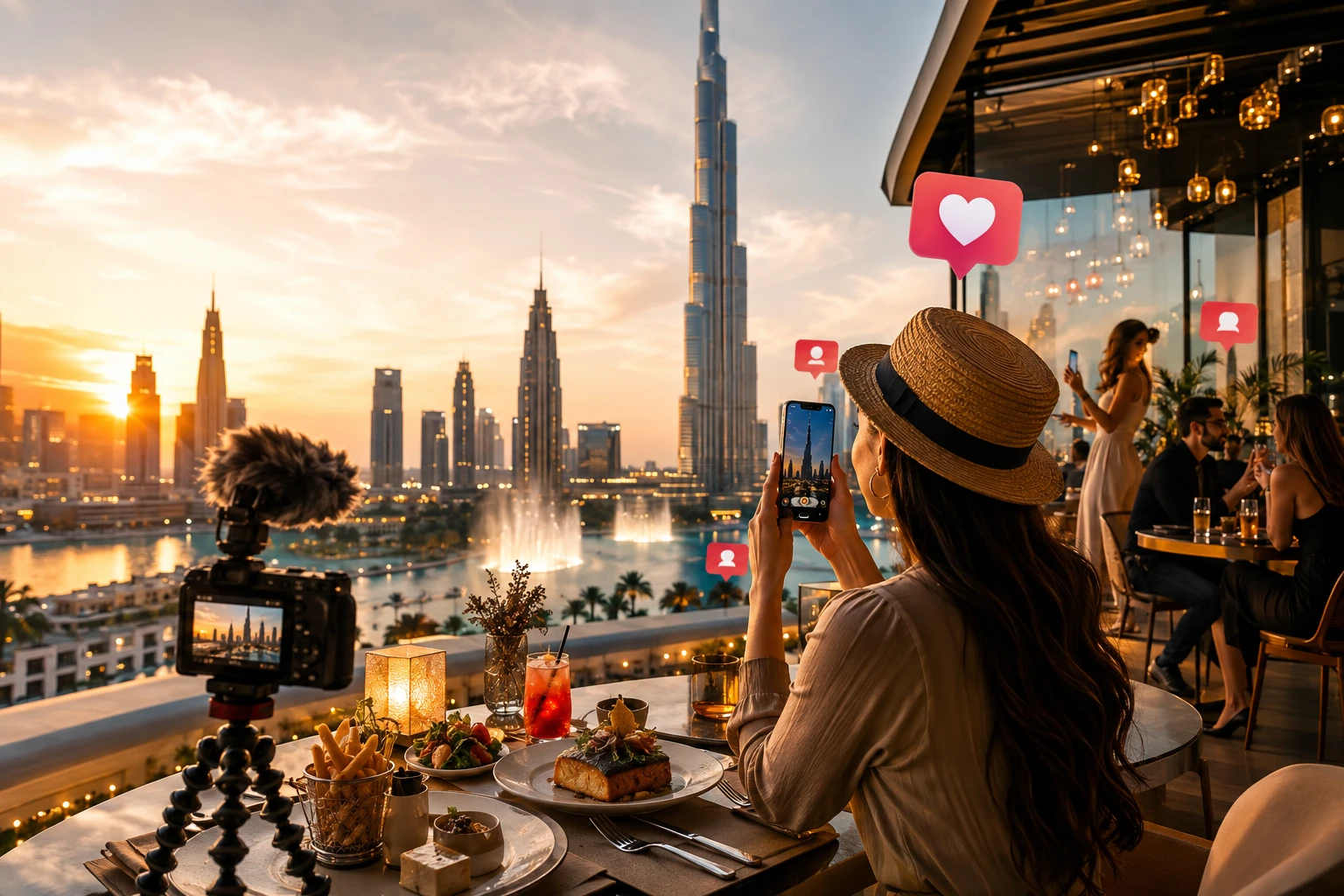
Why Hospitality Brands in the Gulf Need Influencer Marketing
A few reasons this works especially well in Dubai, Abu Dhabi, and across Saudi Arabia, Qatar, Bahrain, and Oman:
- High trust in creator recommendations. Regional audiences increasingly treat influencer reviews as more reliable than star ratings or brand-published content.
- Visual-first culture. Hospitality is inherently visual—plated food, styled rooms, poolside views—which maps perfectly onto Instagram Reels and TikTok.
- Tourism + local overlap. Campaigns can simultaneously target GCC nationals, expat residents, and inbound tourists, all consuming the same platforms.
What a Strong Hotel or Restaurant Influencer Campaign Looks Like
1. Creator-Property Fit Over Follower Count
A micro-influencer with 20K genuinely engaged local foodies will often outperform a celebrity with a million followers scattered across the wrong geography. For hospitality, relevance beats reach.
2. Experience-Led Content, Not Just Posts
The most effective campaigns invite creators to actually stay, dine, or experience the property—a weekend stay, a tasting menu, a spa day—so the content captures a real narrative rather than a staged advertisement.
3. A Mix of Content Formats
- Reels/TikToks showing the full experience arc (arrival, room reveal, dining, checkout)
- Story takeovers for real-time, behind-the-scenes access
- Static carousel posts for menu highlights or amenity features
- UGC-style content that can be repurposed for the brand’s own channels and paid ads
Ramadan iftars, National Day celebrations, Eid staycations, and the winter tourism peak (October–March) are natural moments to align influencer content with spikes in regional search and booking intent.
Measuring What Actually Matters
For hotels and restaurants, vanity metrics like likes are the least useful signal. The campaigns worth investing in track:
- Booking or reservation attribution via unique promo codes or booking links
- Foot traffic lift during and after the campaign window
- Direct message and inquiry volume generated from creator content
- Content usage rights — securing the ability to repurpose creator footage for the property’s own paid social and website
The OneHub Approach
At OneHub, we work with hospitality brands across the UAE, Saudi Arabia, Qatar, Bahrain, and Oman to build influencer programs that are built around outcomes, not impressions. That means:
- Vetting creators for genuine audience alignment with the property’s positioning (luxury, family, business travel, fine dining, casual)
- Negotiating usage rights upfront so content has a life beyond the influencer’s own feed
- Structuring campaigns around measurable actions — bookings, reservations, foot traffic — not just reach
- Coordinating multi-creator rollouts for property openings, menu launches, or seasonal promotions
Final Thought
The hotel and restaurant brands winning in the Gulf right now aren’t necessarily the ones with the biggest ad budgets — they’re the ones whose properties show up authentically in the feeds people already trust. If your hospitality brand hasn’t built a structured influencer strategy yet, now is the moment, ahead of the region’s next peak tourism season.