
Most influencer campaign case studies stop at reach and impressions — numbers that look good in a deck but don’t answer the question every brand actually cares about: did it sell product? This breakdown walks through how a UAE fashion campaign was structured from creator selection through to tracked conversions, and what made the difference between content that performed and content that sold.
The Brief: Starting With the Business Problem, Not the Content
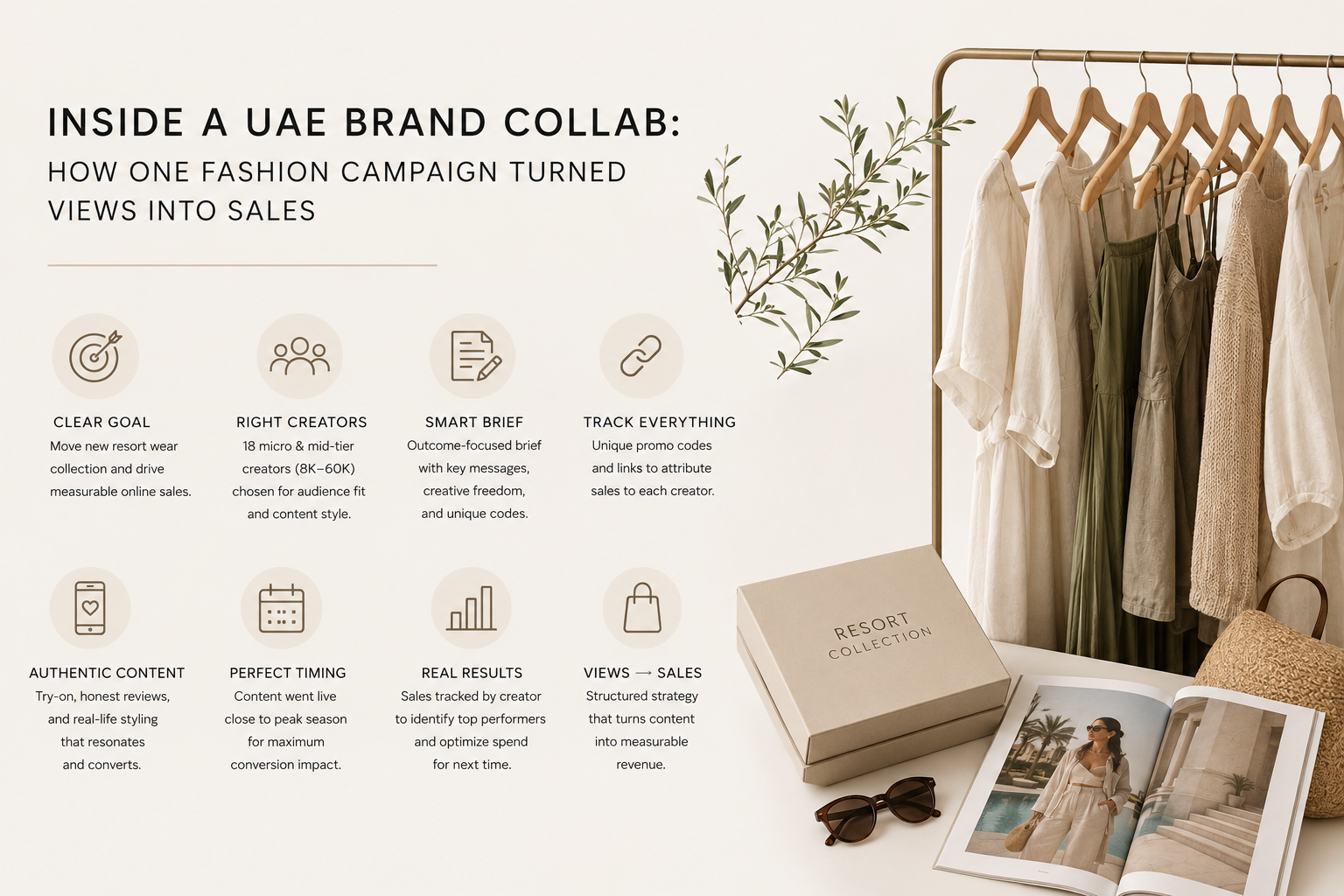
Every campaign that converts starts with a clear commercial goal, not a content wishlist. In this case, the brand — a Dubai-based contemporary fashion label — needed to move a new resort wear collection in the six weeks before peak season, with a specific target: a measurable lift in online sales, not just brand awareness.
That distinction shaped everything downstream. Instead of briefing creators purely on aesthetic (“show off the new collection”), the brief was built around a purchase journey: what would make someone stop scrolling, what would make them trust the product enough to click through, and what would remove friction at the final step of checkout.
Creator Selection: Fit Over Follower Count
Rather than sorting creators by follower count, the selection process prioritized three things: audience overlap with the brand’s actual customer base, historical engagement rate on similar product categories, and — critically — whether the creator’s existing content style matched how the product needed to be shown (fit, movement, fabric texture).
The final roster leaned heavily micro and mid-tier: eighteen creators between 8,000 and 60,000 followers, each selected for a specific angle — some for styling versatility, some for honest try-on and sizing content, a couple for aspirational lifestyle placement. No single creator was expected to carry the whole campaign; the strategy relied on the combined weight of the roster.
Streetwear Drops Are Getting Louder
Dubai’s streetwear scene has grown into something genuinely distinct from what’s happening in London, New York, or Seoul — heavily influenced by Gulf youth culture, but increasingly confident in its own identity. This season’s drops lean into oversized tailoring mixed with technical fabrics, region-specific graphic references, and a strong sneaker-collaboration culture that mirrors what’s happening globally but with a distinctly local flavor.
The creators leading streetwear content in Dubai tend to have crossover appeal — content that plays equally well on Instagram Reels and TikTok, often filmed in recognizable Dubai locations (Alserkal Avenue, City Walk, Al Seef) that double as a backdrop and a cultural signal. Brands working with these creators benefit from content that feels native to the platform rather than obviously branded.
The Content Brief: Specific Enough to Guide, Loose Enough to Stay Authentic
Content briefs were built around outcomes, not scripts. Each creator received:
- Core product details and key selling points (fabric, fit notes, sizing guidance)
- A specific promo code unique to that creator, both for tracking and to give their audience a personal incentive
- Clear direction on what to show (true-to-life movement, honest fit commentary) and what to avoid (overly staged or clearly scripted delivery)
- Freedom to shoot in their own style, locations, and voice
This balance mattered. Overly rigid briefs tend to produce content that reads as an ad, which UAE audiences — particularly the 18–35 segment most active on Reels and TikTok — are quick to scroll past. Giving creators ownership over how they told the story, while controlling the key facts and tracking mechanism, kept the content feeling native to each platform.
Tracking: The Part Most Campaigns Skip
The single biggest difference between this campaign and a typical “post and hope” influencer push was the tracking infrastructure built in from day one. Every creator had:
- A unique promo code tied directly to their name
- A trackable link where platform data allowed it
- A defined content window so performance could be measured against a clear before/after period
This meant that by the end of the campaign, the brand wasn’t just looking at likes and comments — it had a clear, creator-by-creator sales attribution model showing exactly which content converted and which underperformed.
What Actually Moved Product
A few patterns emerged that are worth any brand’s attention. Try-on and honest review content consistently outperformed polished lifestyle shots on conversion, even when the lifestyle content had higher view counts. Audiences engaged with the aspirational content, but they purchased after the practical content — the creator explaining how a piece actually fit their body, moved when they walked, or handled a real Dubai afternoon.
Timing also mattered more than expected. Content that went live in the two weeks before the resort season peak converted meaningfully better than content posted earlier, even from the same creators — a reminder that influencer content, like any marketing channel, benefits from proximity to the actual purchase moment.
Turning Views Into Sales: The Numbers That Matter
By the end of the six-week window, the campaign’s promo-code tracking showed a clear pattern: a small handful of creators — those whose audience and content style most closely matched the brand’s actual customer — drove a disproportionate share of tracked sales relative to their follower count. This is the finding that reshapes how the brand approaches its next campaign: rather than spreading budget evenly across the roster next time, spend can now be weighted toward the creator profiles that proved they convert, not just the ones with the biggest reach.
What This Means for Brands Evaluating an Agency
This is the kind of breakdown that matters when a brand is deciding whether to run influencer marketing in-house or through an agency. The parts that are easy to do alone — finding creators, sending free product, hoping for a post — rarely produce this level of insight. The parts that actually drove sales here — audience-fit creator selection, tracked promo codes, timing strategy, and post-campaign analysis of what converted versus what just performed — are exactly the areas where a specialized agency earns its fee, because they compound: every campaign gets smarter about which creator profiles actually sell.
The Takeaway
Views, likes, and reach are easy to generate in the UAE’s influencer market. Sales are not. The difference comes down to structure — audience-matched creator selection, briefs built around the purchase journey rather than just aesthetics, and tracking that connects specific content to specific revenue. Brands that build campaigns this way don’t just get a good-looking report; they get a repeatable playbook for the next one.
Frequently Asked Questions
How do you track sales from an influencer campaign in the UAE?
The most reliable method is unique promo codes per creator, combined with trackable links where the platform supports them. This attributes sales directly to individual creators rather than relying on aggregate reach or engagement numbers.
Should follower count be the main factor in creator selection?
No — audience overlap with the actual target customer and content style fit typically matter more than raw follower count. Smaller, well-matched creators often convert better than larger, loosely-matched ones.
What type of content converts best for fashion campaigns — polished lifestyle shots or try-on content?
Try-on and honest review content tends to outperform polished lifestyle content on conversion, even when lifestyle content generates more views, because it answers practical questions (fit, sizing, movement) that drive the purchase decision.
Does campaign timing affect conversion rates?
Yes — content published closer to the actual purchase or seasonal moment (e.g., just before resort season) tends to convert better than the same content published earlier, even from identical creators.
Is it worth using an agency instead of managing influencer campaigns in-house?
For campaigns where sales attribution and creator-fit strategy matter, an agency’s experience in vetting creators, structuring trackable promo systems, and analyzing post-campaign data typically produces more reliable, repeatable results than ad hoc in-house outreach.