
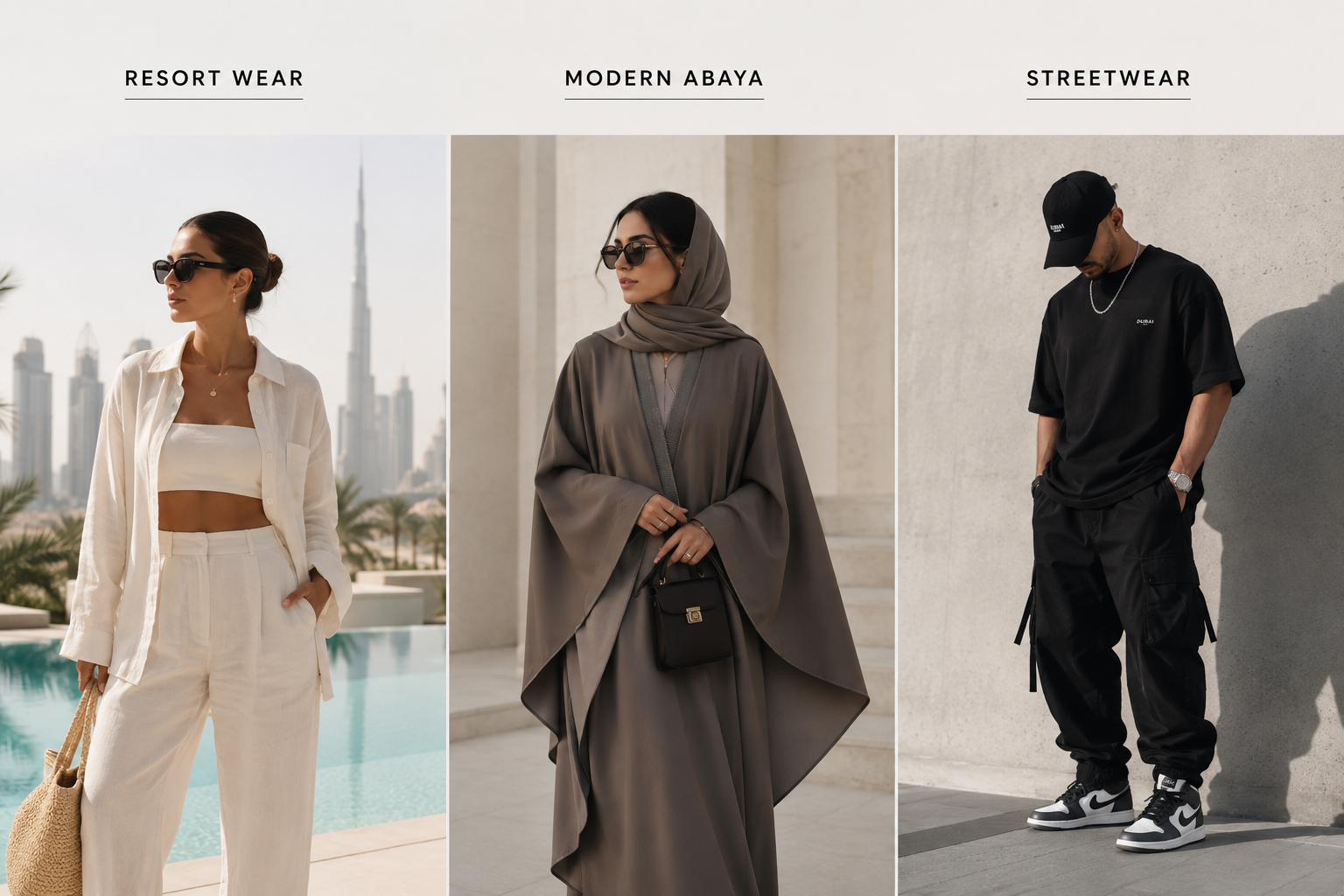
Dubai’s fashion scene moves fast, and it rarely moves through fashion week runways first — it moves through feeds. The creators who set the pace here aren’t just posting outfits; they’re setting the trend calendar for an entire region. Here’s what’s actually trending on Dubai’s streets, in its resorts, and across its social feeds this season, and the creators worth watching for each look.
Resort Wear Gets a Structured Update
Resort wear has always had a home in Dubai, but this season it’s moving away from the loose, breezy silhouettes of past years toward something more structured — tailored linen sets, sculpted one-piece swimwear paired with sheer cover-ups, and a noticeable return of block color over print. It’s resort wear that looks as at-home at a beach club brunch as it does poolside.
The creators driving this look tend to split their content between actual resort locations — Palm Jumeirah beach clubs, Ras Al Khaimah getaways — and styling breakdowns that show the same piece dressed up or down. That versatility content performs particularly well, because it answers the exact question a shopper has before buying: can I actually wear this more than once?
The Modern Abaya Moment
Few categories have evolved as visibly as the abaya over the past two seasons. What’s trending now sits firmly at the intersection of modesty and architecture — sharp cape sleeves, asymmetric hemlines, and fabric choices (crepe, satin-back, structured cotton blends) that hold shape rather than just drape.
Creators in this space have become genuine tastemakers rather than just models for a brand. The best modest-fashion creators in Dubai build entire content series around draping technique, occasion-appropriate styling (Eid versus everyday versus evening), and how a single abaya can be restyled with different belts, layering pieces, or accessories. This is a category where creator credibility matters enormously — audiences can tell within seconds whether a creator actually wears abayas as part of their life or is just modeling for a brief.
Streetwear Drops Are Getting Louder
Dubai’s streetwear scene has grown into something genuinely distinct from what’s happening in London, New York, or Seoul — heavily influenced by Gulf youth culture, but increasingly confident in its own identity. This season’s drops lean into oversized tailoring mixed with technical fabrics, region-specific graphic references, and a strong sneaker-collaboration culture that mirrors what’s happening globally but with a distinctly local flavor.
The creators leading streetwear content in Dubai tend to have crossover appeal — content that plays equally well on Instagram Reels and TikTok, often filmed in recognizable Dubai locations (Alserkal Avenue, City Walk, Al Seef) that double as a backdrop and a cultural signal. Brands working with these creators benefit from content that feels native to the platform rather than obviously branded.
Why Trend Roundups Like This Work as a Marketing Tool
For a brand, a piece like this does more than describe what’s trending — it functions as a live directory of the creators actually shaping each category. Every look tagged to a real creator becomes a soft introduction: brands scanning for talent in a specific niche (modest wear, resort, streetwear) get a starting shortlist, and creators featured have a strong incentive to share the piece themselves, since it positions them as a trendsetter rather than just another sponsored post.
That sharing behavior is exactly what makes this content format valuable beyond a single read. A creator tagged in a trend roundup will typically repost it to their own audience, and because the piece links back to the original post, it creates a natural backlink and referral loop that a standard product page or campaign announcement simply can’t generate.
How Brands Should Use Seasonal Trend Content
Trend roundups work best as an ongoing content series rather than a one-off post — a new edition each season keeps the piece relevant and gives brands (and creators) a reason to check back. For a brand actively running influencer campaigns, this format also works as a low-friction outreach tool: instead of a cold pitch, reaching out to a creator with “we featured your look in this season’s trend roundup” opens a warmer conversation than a generic collaboration request.
It also gives brands a genuinely useful planning input. If modest fashion and resort wear are both showing strong creator activity and audience engagement this season, that’s a signal worth acting on — both are categories where structured campaigns can move quickly, before the trend saturates.
Looking Ahead
Dubai’s fashion identity right now is defined by this blend — structured resort wear, architectural modest fashion, and a streetwear scene finding its own voice — and the creators covered here aren’t just following those trends, they’re actively defining them. For brands, the smartest move this season isn’t picking one category to chase. It’s building relationships with the creators leading each lane, before the next season shifts the trend calendar again.
Frequently Asked Questions
How often should a fashion brand publish a trend roundup like this?
Seasonally works best — roughly every 2–3 months — so the content stays current and gives both readers and featured creators a reason to check back regularly.
Why tag specific creators instead of just describing the trend?
Tagging real creators turns a trend piece into a discovery tool for brands scouting talent, and gives creators a strong incentive to repost the content themselves, extending its reach organically.
What's driving the modern abaya trend in Dubai right now?
The current shift is toward structured, architectural silhouettes — cape sleeves, asymmetric hemlines, and fabrics that hold shape — moving away from softer, looser draping seen in previous seasons.
Is Dubai's streetwear scene influenced by international trends or is it distinct?
Both — it draws on global streetwear culture but has developed a distinct identity shaped by Gulf youth culture, regional graphic references, and content filmed in recognizably Dubai locations.
How can a brand use this kind of content for creator outreach?
Featuring a creator in a trend roundup creates a natural, warm opening for outreach — referencing the feature gives a collaboration pitch context and relevance instead of arriving as a cold message.