
Student Ambassador Programs: A Complete Guide
What Is a Student Ambassador Program
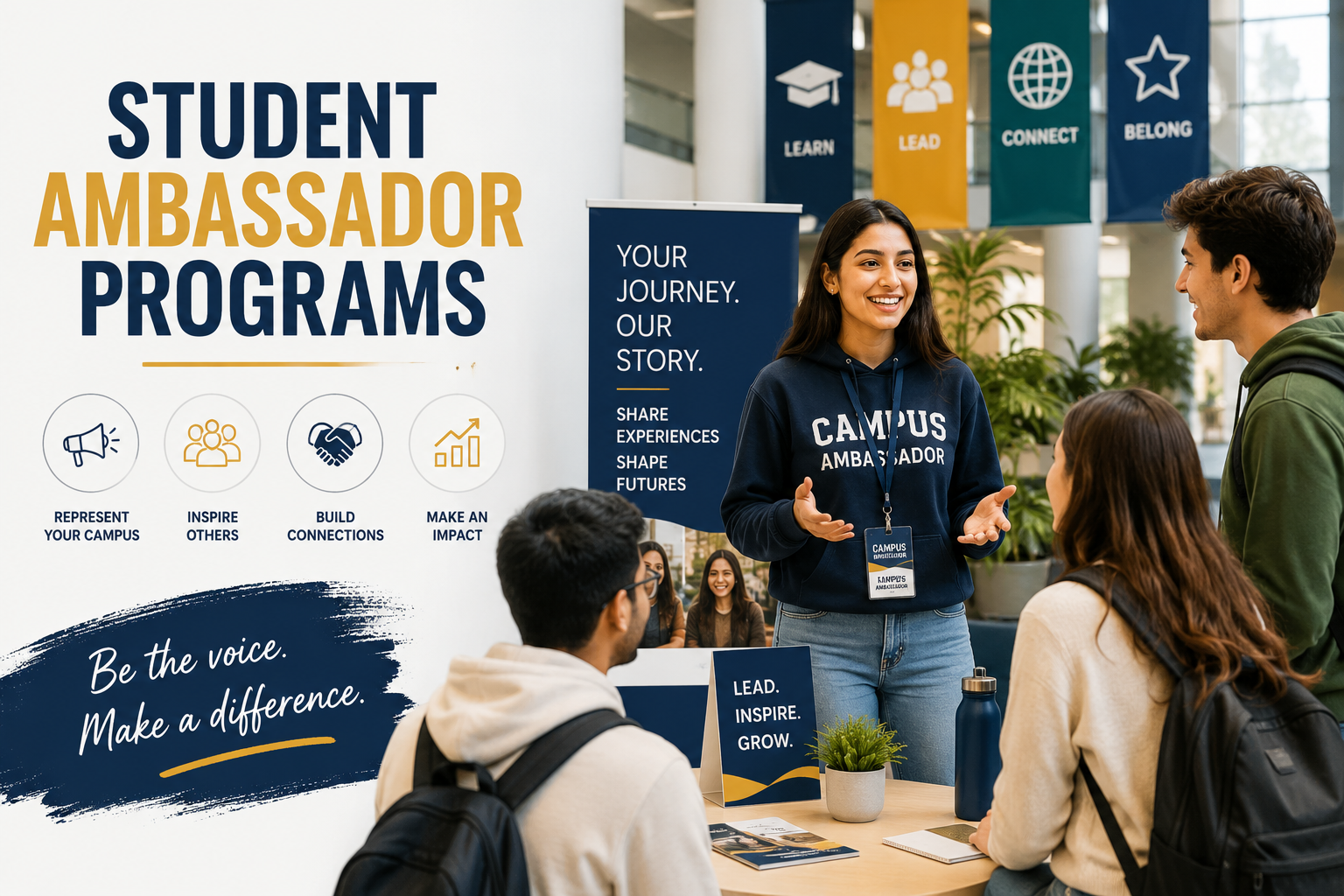
A student ambassador program is a structured, ongoing partnership between a brand or institution and a group of students who represent it on campus and across social media. Unlike a one-off influencer collaboration, an ambassador program builds a longer-term relationship, giving the brand a consistent, trusted presence within a student community over time.
Ambassador programs are used by both consumer brands looking to reach Gen Z audiences and by universities and colleges looking to support their own admissions and campus life marketing through genuine student voices.
Ambassador programs also offer a secondary benefit that is often overlooked: the students involved gain genuine marketing, content creation and communication experience, which many go on to reference directly in their own future job applications, making the program valuable to participants well beyond any direct compensation.
Why Student Ambassador Programs Work
Nano influencers among UAE students, the kind of creators typically recruited into ambassador programs, carry a level of trust within their immediate community that larger, more distant influencers cannot easily replicate. Because ambassadors are genuinely part of the student body, their recommendations read as advice from a peer rather than a paid endorsement, even when the relationship is transparently disclosed.
This trust factor becomes especially important in categories where audiences are naturally sceptical of paid advertising, such as beauty, fragrance and lifestyle products aimed at a Gen Z audience already accustomed to identifying and dismissing overtly promotional content.
Types of Student Ambassador Programs
Brand ambassador programs typically focus on product awareness and campus-level distribution, often built around categories like fashion, beauty, food delivery, telecom or fragrance. Institutional ambassador programs, run by universities and colleges, focus more on admissions support, campus life content and peer mentoring for prospective and newly enrolled students.
A third, growing category combines both: brands partnering directly with a university’s existing ambassador network to reach students through an already-established, trusted structure, rather than building a separate program from scratch.
Hybrid programs of this kind are becoming increasingly common in the UAE and wider GCC, where brands recognise that partnering with an already-trusted campus network delivers stronger results than attempting to build entirely separate ambassador relationships from a standing start.
How to Structure Compensation and Perks
Effective programs typically combine a small base payment or stipend with product gifting, exclusive event access, and career-building perks such as a reference or portfolio-worthy content experience. Relying purely on gifted product tends to attract less committed ambassadors and results in inconsistent content, while a structured, partially paid program tends to build stronger long-term engagement.
It’s also worth building in a clear off-boarding process for ambassadors who complete their studies or step away from the program, ensuring the relationship ends on good terms and, where appropriate, transitions into a simple alumni advocate role rather than ending abruptly.
Recruiting the Right Student Ambassadors
The strongest ambassador programs recruit for genuine enthusiasm and consistency rather than follower count alone. Campus lifestyle influencers in Dubai and similar creators across the region often make excellent ambassadors precisely because their existing content style already fits the ambassador role naturally, rather than requiring significant coaching to adjust their tone.
A well-run recruitment process typically includes an application or interview stage, a short trial period, and clear expectations set out from the beginning around posting frequency, content style and brand guidelines.
Diversity across faculties, interest areas and personal backgrounds also strengthens a program considerably, since a roster of ambassadors who only represent one narrow slice of the student body will struggle to reach or resonate with the full range of prospective students a brand or institution is trying to connect with.
Measuring Success of an Ambassador Program
Success metrics should extend beyond simple engagement numbers to include content consistency, audience sentiment, and where relevant, trackable actions such as promo code usage or enquiry form submissions. For institutional programs, application or enrolment enquiries tied to specific ambassadors or campus events offer a clearer measure of impact than social metrics alone.
Seasonal moments, such as back to school activities and back to school essentials shopping in Dubai, offer a useful natural checkpoint for reviewing ambassador content performance, since these periods typically generate a spike in both content output and audience engagement that can be compared year over year.
It is also worth tracking how ambassador content performs relative to standard paid influencer content over the same period, since many brands find that a well-run ambassador program, despite lower individual reach per post, delivers stronger cost efficiency and audience trust over a full academic year.
Launch Your Student Ambassador Program With OneHub
Whether you’re a brand looking to build awareness with Gen Z audiences or an institution looking to support admissions through genuine student voices, OneHub can help design, recruit and manage a student ambassador program across the UAE and GCC. Contact our team to start building your program.
Frequently Asked Questions
What is the difference between a student ambassador and a regular influencer?
A student ambassador typically has an ongoing, structured relationship with a brand or institution over a semester or academic year, while a regular influencer partnership is usually campaign-specific and shorter term.
How many ambassadors should a program include?
This depends on scale and budget, but many effective programs start with five to fifteen ambassadors across different faculties, interests or campuses before expanding further.
Do student ambassadors need to be paid?
Most programs use a mix of cash compensation, product gifting, exclusive perks and experience-building opportunities, rather than relying on gifting alone, since paid programs tend to attract stronger, more consistent commitment.
How long should a student ambassador program run?
Most programs run in semester-long or academic-year cycles, allowing enough time to build genuine content history and community trust before evaluating and refreshing the ambassador group.
How does OneHub support student ambassador programs?
OneHub handles recruitment, vetting, contracting, ongoing management and performance tracking for student ambassador programs across the UAE and GCC, for both brands and education institutions.